What does a Level 5 Sports Massage Therapist do – and do you need to be sporty to see one?
You don’t need to be an athlete to benefit from sports massage.
In fact, many of the people we see for sports massage at our clinic in Maidenhead aren’t coming because of sport at all.
They might have a neck and shoulders that tighten up after hours at a desk, legs that feel heavy after a busy week, a recurring muscular problem, or an ache that is starting to get in the way of everyday life.
Of course, we also see plenty of runners, cyclists, gym-goers and sportspeople looking for help with recovery, injury or performance.
The important thing is that sports massage describes the type of treatment – not the type of person who can benefit from it.
At Active Health Clinics, we’ve also made a conscious decision to have Level 5 qualified sports massage therapists within our clinical team.
But what does Level 5 actually mean? And does it make a difference to the treatment you receive?
Key Points
- You do not need to play sport to benefit from sports massage.
- Sports massage may be used for muscular pain, tension and stiffness, as well as supporting people with the physical demands of sport, exercise, work and everyday life.
- Sports massage doesn’t simply mean applying as much pressure as possible. Treatment should be appropriate to the individual.
- Our sports massage team at Active Health Clinics in Maidenhead is Level 5 qualified, with advanced training in areas including assessment and treatment.
- A good sports massage appointment should start with understanding the person, their symptoms and what they are hoping to achieve.
- Sometimes massage is appropriate on its own; at other times another form of assessment, rehabilitation or treatment may be more suitable.
- A good therapist should also recognise when not to treat and when someone should be referred to another healthcare professional.
What is sports massage?
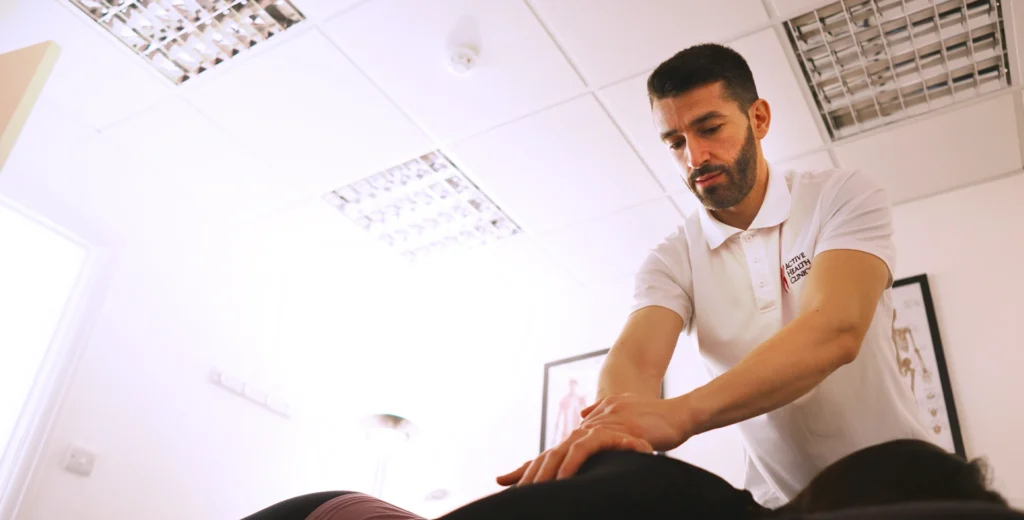
Sports massage is a form of soft-tissue therapy commonly used by people experiencing muscular pain, tightness or stiffness, as well as those managing the physical demands of sport, exercise, work and everyday life.
Despite its name, it isn’t exclusively for athletes.
Someone training for a marathon may have very different reasons for booking an appointment from someone who spends eight hours a day sitting at a computer, but both place physical demands on their body.
That’s why an appointment should start by understanding you, rather than simply identifying which muscle you would like massaged.
Your therapist may want to know what you’re experiencing, when it started, what aggravates or relieves it, your work and activity levels, previous injuries and what you’re hoping to achieve.
And assessment doesn’t necessarily start once you’re on the treatment table.


Clinical Insight: Assessment starts from the moment you meet
For George Antoni, Level 5 Sports Massage Therapist at Active Health Clinics, it begins from the moment he meets someone:
“Everything starts from the moment you meet the client. First, I want them to feel comfortable and welcome. I observe how they walk and move, then we have a chat about any issues they have and what they expect from the treatment.
“I also assess the body to identify any dysfunctions and better understand what might be causing the problem.”
Apphia, another of our Level 5 therapists, makes an equally important point:
“Sometimes the area causing pain isn’t necessarily the area that needs the most attention.”
That’s why looking at movement and the wider picture can be useful before deciding what and how to treat.
What does a Level 5 Sports Massage Therapist actually mean?
Sports massage qualifications can vary, which isn’t always obvious when you’re looking for a therapist.
At Active Health Clinics, our sports massage therapists are qualified to Level 5.
But for a patient, the important question isn’t really what number appears on the certificate. It’s what that additional training means when you come in for treatment.
For Apphia, one of the biggest differences is learning to look beyond whichever muscle happens to feel tight.
“For me, the biggest difference is learning to think clinically rather than simply treating whatever muscle feels tight. My Level 5 training gave me a much deeper understanding of anatomy, biomechanics and assessment, which allows me to look at the bigger picture and consider why an area might be overloaded in the first place.”
It also means recognising that two people presenting with very similar problems don’t necessarily need exactly the same treatment.
“Two people can have very similar symptoms but respond completely differently to treatment, so being able to assess, treat, monitor the response and adapt the approach is a really important part of being an effective therapist.”
George highlights another important part of his Level 5 training: knowing when massage isn’t appropriate.
“It gave me a much better understanding of the human body and improved the way I communicate with clients. But most importantly, it taught me to think about safety first – knowing when someone is suitable for treatment and when they should be referred to another professional.”
Put those perspectives together and you get a good explanation of what we want Level 5 sports massage to mean at Active Health Clinics:
Assess first. Understand the bigger picture. Individualise the treatment. And recognise when someone needs something other than massage.
What’s the difference between sports massage and a normal massage?
There can be overlap between different types of massage, so it isn’t particularly helpful to describe one as simply being “better” than another.
A relaxation massage, for example, may be exactly what someone wants if their primary goal is relaxation and general wellbeing.
Sports massage tends to have a different focus.
The appointment is commonly centred around a particular problem, physical demand or goal.
That could mean working with a runner experiencing recurring calf tightness, but equally it could involve someone whose neck and shoulders continually become uncomfortable after working at a desk.
Assessment and treatment can therefore be directed towards what that individual is experiencing and what they’re trying to achieve.
And there’s another important distinction:
Sports massage doesn’t simply mean a normal massage performed much harder.
Does sports massage need to hurt to be effective?
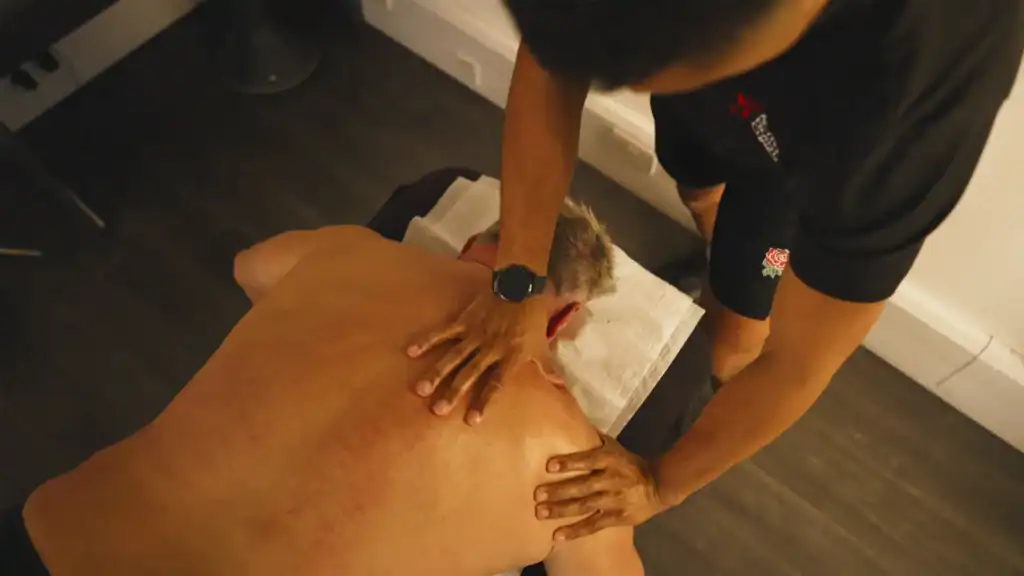
One of the most persistent myths around sports massage is that the more painful the treatment, the more effective it must be.
George disagrees:
“The idea that ‘the harder, the better’ is a myth.”
As he explains:
“We are all different, so the pressure needs to be adjusted to what the individual tissues need.”
Krishna, one of our other Level 5 Sports Massage Therapists, agrees and says communication between the therapist and patient is an important part of getting this right:
“Sports massage doesn’t have to hurt to be effective. Everyone is different, which is why no two massages should ever be the same.
“Pressure should be decided by working with your client, understanding their individual pain threshold and, most importantly, communicating with them throughout the treatment.”
As Krishna puts it:
“No pain, no gain isn’t always true!”
Apphia adds that excessive pressure can sometimes be counterproductive:
“Too much pressure can actually make someone tense up or leave them unnecessarily sore afterwards.”
Sometimes deeper treatment may be appropriate; at other times a different technique or gentler approach may be more suitable.
An effective sports massage isn’t an endurance test. The therapist should communicate with you, monitor how you respond and adapt the treatment accordingly.
Who can benefit from sports massage?
One reason we’d like to move away from the stereotype of sports massage being exclusively for athletes is the sheer range of people who come through our clinic.

Runners, cyclists and sportspeople
Repeated training places physical demands on the body. Sports massage may form one part of an individual’s approach to managing training, recovery and musculoskeletal problems.
Gym-goers
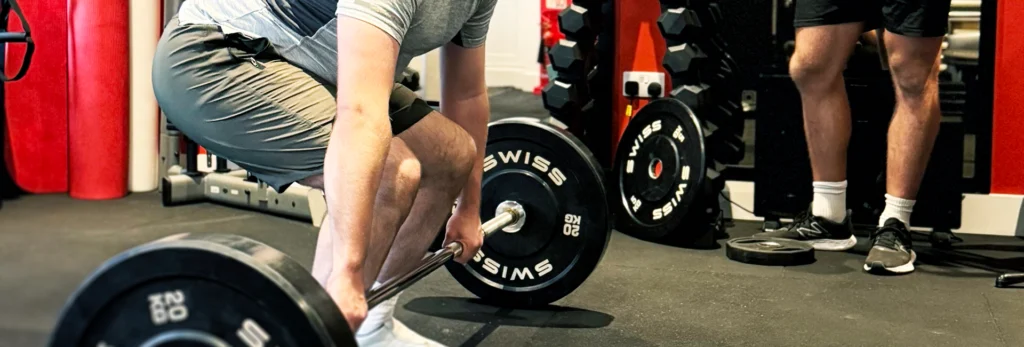
Increasing weights, changing programmes or suddenly increasing training frequency can leave muscles feeling sore, tight or overloaded.

Desk and office workers
You might not consider sitting at a desk particularly physical, but spending long periods in relatively static positions can be associated with discomfort and stiffness.
The neck, shoulders and upper back are common areas people ask our therapists about.
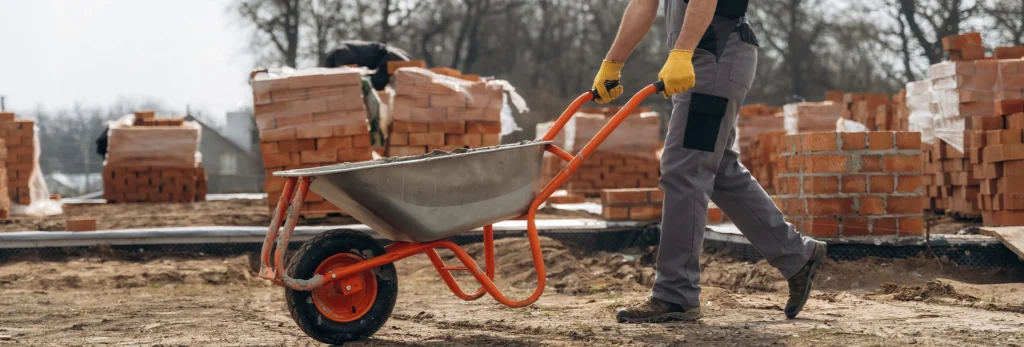
People with physically demanding jobs
Tradespeople, healthcare workers, gardeners and anyone who spends much of the day lifting, carrying, bending or performing repetitive activities can experience muscular aches and fatigue.

Parents
Carrying babies, lifting children, feeding, interrupted sleep and spending a surprising amount of the day in awkward positions can all place demands on the body.

Weekend warriors
You sit behind a desk Monday to Friday and then expect your body to run, cycle, play football, golf, garden and walk the dog all weekend.
Sometimes your body has something to say about that arrangement!

People who simply hurt
You don’t need a sporting reason to seek help.
If muscular pain, tightness or stiffness is affecting what you want or need to do, an assessment can help determine whether sports massage is an appropriate option for you.
Can sports massage help with an injury?
This is where we need to be careful with the word injury.
Not every painful problem is simply a tight muscle that needs massaging.
If you’ve suffered a significant injury or have severe, unexplained or worsening symptoms, substantial swelling, neurological symptoms such as significant numbness or weakness, or anything else that concerns you, an appropriate healthcare assessment may be required.
There are circumstances where sports massage and soft-tissue treatment may form part of someone’s wider management or rehabilitation.
The important part is establishing what you actually need rather than assuming massage is automatically the answer.
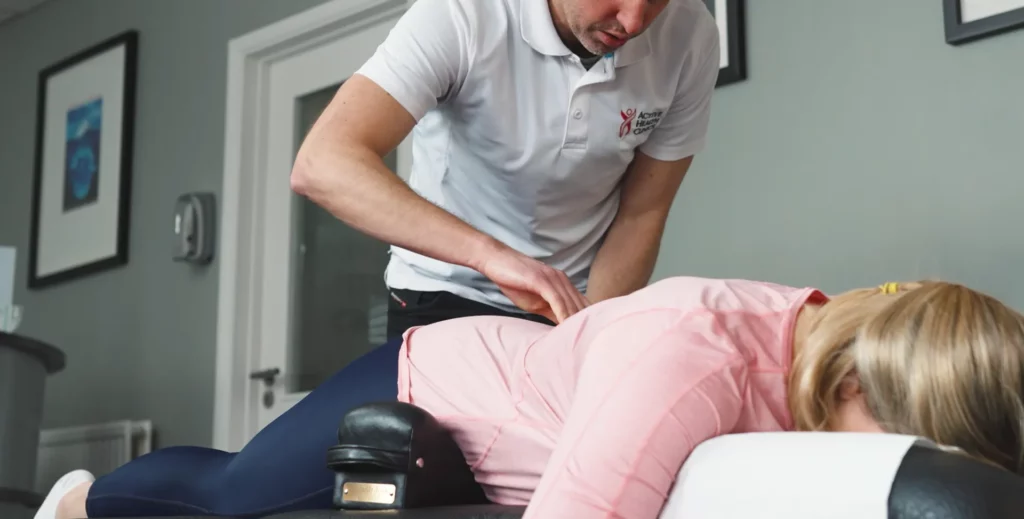
At Active Health Clinics, our sports massage therapists work within a multidisciplinary team alongside chiropractors, osteopaths, physiotherapists and strength & conditioning professionals.
That means massage doesn’t have to exist in isolation.
What if sports massage isn’t the right treatment?
Sometimes one of the most valuable things a practitioner can do is recognise that they’re not the right person to treat you.
This is something George particularly highlighted when talking about his Level 5 training.
If an assessment suggests that someone’s problem requires further investigation, a different type of clinical assessment or rehabilitation beyond massage alone, our therapists can discuss that with them.
Within Active Health Clinics, that might mean recommending assessment by one of our physiotherapists, chiropractors, osteopaths or another appropriate healthcare professional.
The opposite can happen too.
One of our other clinicians may feel that sports massage could complement someone’s existing treatment or rehabilitation and recommend seeing a member of the massage team.
For us, that’s one of the benefits of working as a multidisciplinary clinic: the aim is to find the most appropriate approach for the patient rather than trying to make every problem fit one particular treatment.
Sports massage, rehabilitation and performance
Hands-on treatment can be useful, but it isn’t always the entire answer.
If the same problem repeatedly returns, it’s worth asking why.
Depending on the individual, that might involve considering training load, strength, mobility, recovery, working habits or other factors that could be relevant.
For some people, massage may therefore sit alongside exercise rehabilitation or strength and conditioning.
For others, it might complement physiotherapy, chiropractic or osteopathic care.
And for somebody without an injury who simply wants to continue training and recovering well, their requirements may be completely different.
There isn’t one formula that suits everybody.

Should I wait until something hurts before having a sports massage?
Not necessarily.
Sports massage is often associated with treating a problem once it has become painful, but that isn’t the only reason people book an appointment.
As Apphia explains:
“You don’t have to wait until you’re in pain to have a massage. It can be a useful part of managing aches and tension, but it can also help you stay on top of how your body feels, particularly if you train regularly, have a physically demanding job or spend long periods sitting at a desk.”
That doesn’t mean everybody needs a massage every week, or that treatment should become something you’re dependent on.
Instead, massage can be one possible part of managing the physical demands you’re placing on your body alongside movement, exercise, appropriate recovery and self-management.
Apphia also makes another important point: treatment works best as a conversation rather than something that’s simply done to you.
“Tell your therapist what you’re experiencing, what you want to achieve and how the treatment feels. The more we understand about you and your body, the more specific and effective we can make the treatment.”
What happens at your first sports massage appointment?
If you’ve never had a sports massage before, don’t worry – you’re not expected to know what treatment you need.
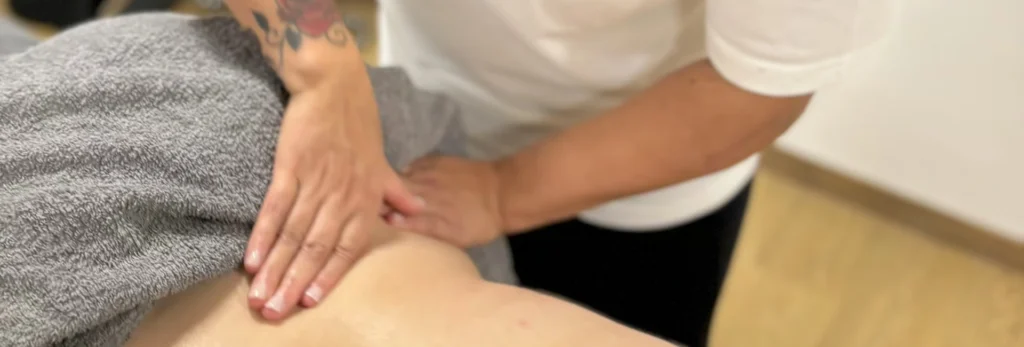
Your first appointment will usually begin with a conversation about why you’ve come in, your symptoms or goals and relevant health, injury and activity history.
Your therapist may then carry out an appropriate assessment, which could include looking at movement and areas of restriction or tension, before discussing treatment with you.
Depending on your presentation, the appointment may include hands-on soft-tissue techniques alongside relevant advice regarding movement, exercise, recovery or self-management.
Most importantly, your appointment should be specific to you.
And there’s something else George wishes people knew before coming in:
“I wish people knew how much we genuinely care about what we do. It’s not just about giving a massage. Therapists care about their clients and constantly continue learning and developing their skills to make treatments more effective and support people on their journey towards better health.”
For us, that’s a fitting description of what we want sports massage at Active Health Clinics to represent:
Not simply a massage appointment, but a practitioner taking the time to understand the person in front of them and what they’re trying to achieve.
Sports Massage in Maidenhead at Active Health Clinics
Our Level 5 Sports Massage Therapists in Maidenhead work as part of the wider clinical team at Active Health Clinics.
This means we can offer sports massage as a standalone service while also having physiotherapy, chiropractic, osteopathy and strength & conditioning available within the clinic when a different or combined approach is appropriate.
And despite the name, you absolutely don’t need to be sporty to come and see us.
Whether you’re trying to get back to running, keep training in the gym, deal with the physical demands of your job, or simply want some help with muscular pain, tightness or stiffness, the starting point is understanding what’s going on and what you’re trying to achieve.
If you’re unsure whether sports massage is the right appointment for you, speak to our Maidenhead team and we can help point you in the right direction.
Frequently Asked Questions About Sports Massage
Do I need to play sport to have a sports massage?
No. Despite its name, sports massage isn’t exclusively for athletes. People may book because of muscular pain or tension, physical work, gym training, repetitive activities or the demands of everyday life.
What does Level 5 Sports Massage mean?
Level 5 is an advanced level of sports massage training. The precise content can depend on the qualification undertaken, but our therapists describe their Level 5 training as developing their understanding of areas such as anatomy, biomechanics, assessment, treatment planning, communication and knowing when someone should be referred to another professional.
All of our sports massage therapists at Active Health Clinics are Level 5 qualified.
Does sports massage hurt?
It doesn’t have to. Some techniques or sensitive areas can feel uncomfortable, but more pain doesn’t automatically mean better treatment. Pressure and technique should be adapted to the individual, with communication between you and your therapist throughout.
Is sports massage just a deep-tissue massage?
No. Although techniques can overlap, sports massage isn’t simply about applying deep pressure. Assessment, your symptoms or goals and your response to treatment can all influence the techniques a therapist chooses.
Can I have sports massage if I don’t exercise?
Yes. You don’t have to exercise or play sport. Work, prolonged sitting, repetitive movements, hobbies and everyday activities can all create physical demands that lead people to seek sports massage.
Can sports massage help with back, neck or shoulder pain?
People commonly seek sports massage because of muscular pain or tension around areas such as the back, neck and shoulders. However, there are many possible causes of pain, so massage won’t be appropriate for every problem. Your therapist can assess your presentation and advise whether massage is suitable or whether another form of assessment may be more appropriate.
How often should I have a sports massage?
There isn’t a universal schedule. It depends on why you’re having treatment, your symptoms, activity or training demands and how you respond. Your therapist can discuss this with you rather than automatically recommending a fixed frequency.
Should I book sports massage or physiotherapy?
It depends on your problem. If you’re unsure, our team can help guide you. If one of our massage therapists feels further clinical assessment or rehabilitation would be more appropriate, they can also recommend another member of our multidisciplinary team.
Where can I get a Level 5 Sports Massage in Maidenhead?
Active Health Clinics offers Level 5 sports massage from our multidisciplinary clinic in Maidenhead, Berkshire. Our massage therapists work alongside our chiropractic, osteopathy, physiotherapy and strength & conditioning teams.

Ready to book a sports massage in Maidenhead?
Whether you’re an athlete, a regular gym-goer, spend your week sitting at a desk or simply have an area that doesn’t feel quite right, our Level 5 Sports Massage Therapists are here to help.
Book a Sports Massage at Active Health Clinics in Maidenhead, or contact our team if you’re unsure which type of appointment would be most appropriate for you.