
Paul came to Active Health Clinics in July 2024 with right hamstring pain while training for his first 50km ultra marathon. Two years later he completed Race to the Stones, a 100km trail ultra run over two consecutive days. This is what happened in between, told by his chiropractor, his sports massage therapist, and Paul himself.
It started with a hamstring
Paul first came to see me on 9 July 2024 with pain in his right hamstring.
On the surface it sounded like a straightforward running injury. He had noticed the pain after a run about a week earlier. It settled with walking, then came back as soon as he ran again. He also had a history of a Grade II tear in the same hamstring dating back to 2016.
There was more going on than that, though.
Paul was running around three times a week and had set himself a specific goal. He was entered into the Thames Path 50km Ultra that September, which would be his first ultra marathon, and he was running it with his daughter.
So the question was never simply how we get a hamstring to stop hurting. It was what Paul needed in order to keep training, get to the start line, and carry on taking on the physical challenges he enjoys.
That distinction has shaped our work together ever since.
What Paul had been living with
Paul had been dealing with a familiar pattern for years before he walked through our door.
“I had struggled over a number of years with over-use training injuries whilst preparing for events, typically half Ironman 70.3 events which are six to seven hours of continuous exercise. As soon as the training volume increased, I would be prone to lower back issues and leg muscle strains. I could go and get fixed, but I never understood the root cause.”
Paul
That last sentence is the important one. Getting patched up and sent away works right up until the training load goes back up.

Looking beyond the painful area
One of the things I like most about chiropractic and sports rehabilitation is that the painful area is not always the whole story.
When I assessed Paul, a few things stood out.
He demonstrated a degree of right leg dominance, with a measurable difference in calf endurance between sides:
- Left single leg calf raises: 15
- Right single leg calf raises: 20
I also found restrictions in his ability to rotate through his trunk and thoracic spine. During rotational testing there was a significant amount of compensation rather than efficient movement through the areas we were assessing.
Neither of those findings tells you on its own why somebody has hamstring pain. Put them in context, though, and they become relevant pieces of the puzzle. This was an endurance athlete increasing his training volume, with a previous tear in the same muscle.
What I wanted to understand was not just where it hurt, but how his body was moving and coping with the demands he was placing on it.
“I had seen chiropractors before, but that first session was a revelation. My presentation of a tight right hamstring was caused by an undiagnosed left shoulder issue that was transferred by fascia to my opposite leg. Who knew? I certainly didn’t. And I was open minded to learn more.”
Paul
A plan that changes as the athlete changes
Paul’s care has included chiropractic treatment, Fascial Manipulation, prescribed exercises and ongoing reassessment. We have also worked alongside his personal trainer and Krishna’s sports massage input.
What has mattered is that none of this has been a rigid, one size fits all treatment plan.
Paul’s goals changed. His training changed. His complaints changed. His care adapted with all of it. Over the last two years we have dealt with hamstring symptoms related to running, neck stiffness related to cycling, a right chest injury after a fall, and various other musculoskeletal and nerve related symptoms connected to his training.
This is something we see regularly with active people. Your body is not a machine where you replace one faulty part and everything is fixed forever. Training load changes. Sport changes. Recovery changes. Life changes.
The job is to understand what is happening now, deal with what needs dealing with, and keep the bigger goal in sight. For Paul that has meant adjusting his treatment in real time around his training rather than following a predetermined series of appointments.
“It now felt like I could stop the break-fix approach I had previously seen happen. The event training was unchanged, but my fear of injury was no longer a concern.”
Paul
Why the wider team matters
Paul’s progress has not come from one practitioner working in isolation.
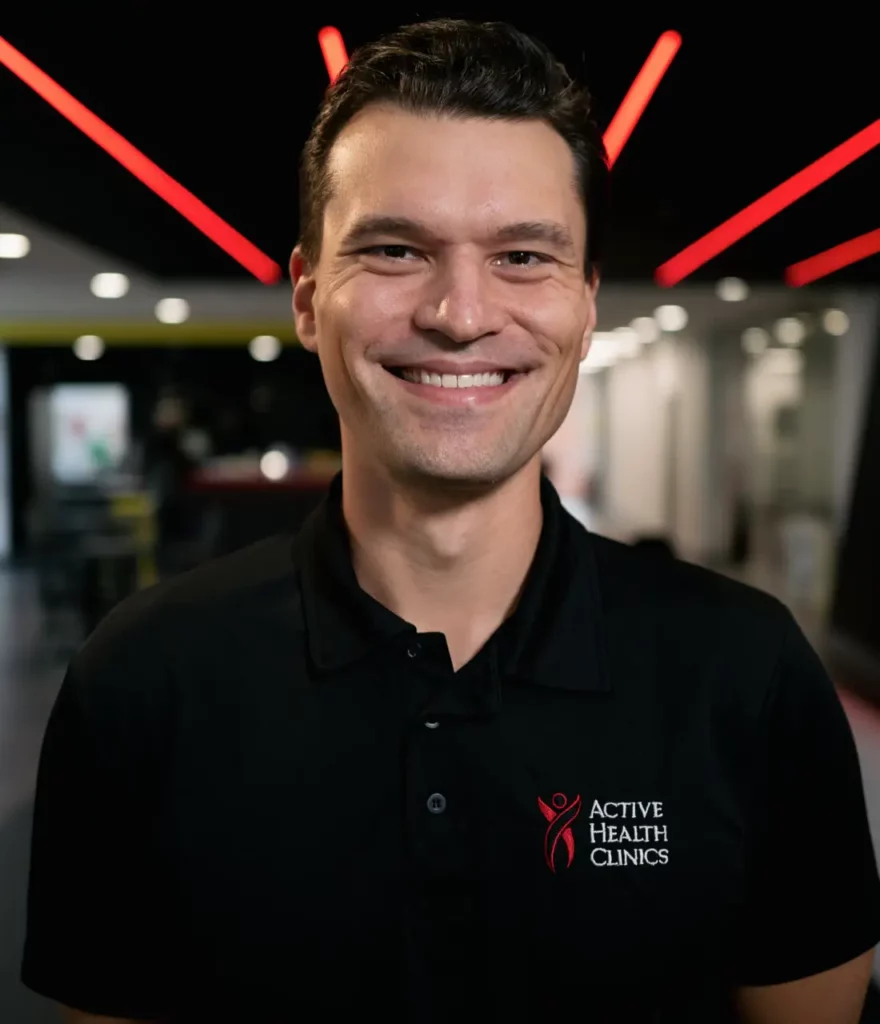
He was already working with a personal trainer when he first came to see me. As we identified areas that could be improved, I passed targeted exercise suggestions and areas of focus across, which allowed the strength and conditioning work to complement what we were seeing clinically. Paul has also worked regularly with Krishna for sports massage.

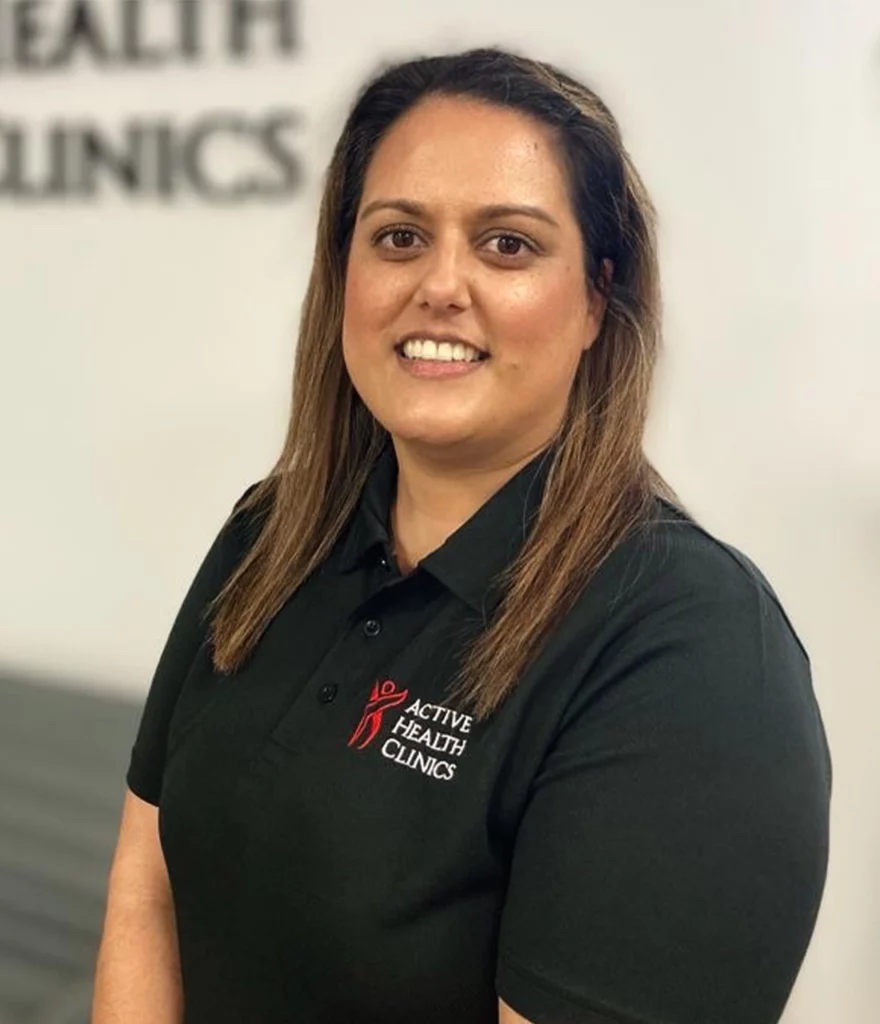
“Paul first came to me around 18 months ago while preparing for an event, and he has kept coming regularly since, usually about once a month as part of his ongoing maintenance. The main thing we worked on was tightness through his legs, particularly his calves and quads, along with some lower back tightness. The challenge was managing the muscle tightness that naturally comes with the amount of running Paul was doing.
If I ever had any concerns I would always speak to Dan. That is one of the good things about working at Active Health. We communicate well and can refer to each other when it makes sense.”
Krishna, Sports Massage Therapist
One example stands out from February 2026. Krishna had worked on Paul’s lower back and legs the day before I saw him. When he came in, his lumbar spine was well balanced and did not require treatment that day. I noted at the time that Krishna’s work had been effective. It is a small thing, but it is exactly the kind of collaboration that makes a difference.
Paul has noticed the shift himself.
“What I have noticed over time is that the sports massage sessions have become less painful, which I mean as a compliment, as Krishna’s best work is when she gets into muscular knots and tightness. But as the strength and conditioning has improved, allied to being more balanced, so the muscular issues to address have become less dramatic.”
Paul
Having several disciplines in the same building only counts for something if the practitioners actually talk to each other. The benefit for the patient comes from care that works together, delivered all from one team.

Sometimes the interesting finding is not where you expect it
One of the more interesting points in Paul’s journey came while we were working on his neck and upper spine.
At a reassessment in January 2026, his hip internal rotation had approximately doubled compared with earlier measurements.
It’s worth sitting with for a moment. We were working on the upper part of his body, and we saw a significant change in movement at the hip.
For me that is a useful reminder that the human body does not follow the neat boxes we put it into. If a runner has a hamstring problem it can be tempting to look only at the hamstring. But movement is a system. The spine, pelvis, hips and lower limbs all have to work together, and improving how one part of that system functions can influence what happens elsewhere.
That does not mean every problem has a hidden cause somewhere else entirely. It does mean a good assessment should look beyond the painful spot.
Measurable progress
We also had an objective measure of progress in Paul’s lower limb strength and endurance.
When I first assessed him in July 2024:
- Left calf raises: 15
- Right calf raises: 20
By January 2026:
- Left: 24
- Right: 29
Both sides improved substantially, and the percentage difference between them came down. In July 2024 his left side was around 25% weaker than his right. By January 2026 that had reduced to roughly 17%.
For an endurance athlete I would generally be looking to get that difference under 10%, so there is still work to do. The direction of travel is what matters, and it has been moving the right way while his training volume has been going up rather than down.
That matters because I do not want rehabilitation to rest purely on whether someone tells me it feels better.
Pain and symptoms matter, obviously. But where it is appropriate, I want to know whether the person is moving better, getting stronger, tolerating more load and becoming more capable of doing the things that matter to them. In Paul’s case that mattered a great deal, because his ambitions were not getting smaller.
“To my analytical mind it all started to make sense, as I could understand why the injuries were occurring as soon as two hour plus training runs were in my schedule.”
Paul
From 50km to 100km
Paul’s goals moved well beyond the 50km ultra that first brought him to the clinic.
He was preparing for Race to the Stones, a 100km ultra along the Ridgeway, completed over two consecutive 50km days. That is a serious physical challenge for anyone, and his treatment needed to support the reality of what he was asking his body to do. As his training load increased we adapted around new complaints and heavier training blocks, and Krishna’s sports massage work carried on alongside it.
“When Paul began preparing for the 100k, we didn’t need to change his treatment much. My focus was keeping his muscles as loose and mobile as possible and helping him avoid unnecessary tightness and cramping. I advised him to come in before and after the event, and I built more stretching into his sessions. I also encouraged him to keep stretching before and after his own runs and to use a foam roller as part of his maintenance.”
Krishna
I want to be clear about what our role was in this.
We did not make Paul capable of running 100km. Paul did that. He put in the training, he made the decisions, and he did the hard work. Our role was to help him understand and manage the musculoskeletal demands of that training, deal with problems when they came up, improve function where it made sense to, and work alongside the other people supporting him.
That is what good active care should look like.

The two days
I will let Paul describe the race himself.
“With hindsight, my decision to do Race to the Stones over two days was the difference that made the difference. My run training was all about back to back long runs. I knew from multi-day cycling that I could recover and go again the next day, I just needed to learn how to achieve this with running.

Come race weekend, the one thing I couldn’t control was the weather, and it was a 30 degree plus heatwave in July. I had trained on hot days over the summer so it was manageable, by running steadily on feel and staying hydrated with electrolytes.
Each day was seven hours of continuous exercise, starting early. By 2pm on the Saturday when I got to the overnight basecamp I was ready to stop. I know now that trying to do the full 100km in one go would have been unachievable. Instead I could recover, shower, stretch, eat, relax, and even though it was camping I slept okay.

Day two was wake up at first light and be ready for a 6am start. That sounds super early but I really appreciated running in the coolest part of the day. Legs felt fine and I ran the first half in an identical time to the first day. The second half was more challenging as I did have a trip and fall after 85km, caused by the deeply rutted trail terrain and mental fatigue starting to kick in. But no damage done, confirmed by a quick visit to the medics at the next pit stop.

Several people have commented that I looked remarkably fresh in my finish line photos. I can assure you that I was faking it, and that was the look of relief. And those same people ask if I would do that event again, to which my answer is not as a competitor but definitely as a volunteer. The vibe is wonderful.”
Paul
The support village
Paul uses a phrase I have borrowed more than once since.
“When I turned sixty I started to think about what a path to retirement might look like and how I could replace the mental challenge of work. My athletic events, something new each year that I haven’t done before, are those challenges, and I have invested in my health and wellbeing to achieve them. The village is everyone involved in that process. Active Health Clinics, my PT, gym class instructors, tri club teammates, friends at parkrun. Most know my back story and are remarkably invested in helping me achieve my aims. I am incredibly grateful, and lucky, to have them all.”
Paul
What I find most interesting about Paul’s story is that he did not come to see me because he had decided to become an ultra marathoner. He was already an active person with ambitious goals. The hamstring was just the problem that brought him through the door.
Paul is now in his sixties and continues to set himself significant physical challenges. He has completed the parkrun alphabet, multiple trail ultras and an eleven day cycle journey from London to Barcelona. As he puts it, he values memories and experiences over performance.
That changes the question. It stops being about fixing an injury and starts being about helping someone keep doing the things that make life interesting to them.
What comes next
Paul already has next year mapped out. A group running weekend in Spain in the spring, Race to the King in the summer, and a three day cycling tour north to south across Wales in early autumn. His daughter is threatening to do a triathlon, so that will need fitting in as well.
Beyond that, he reckons 500 parkruns is achievable. Only 392 to go, which should keep him busy well into his seventies.
What can we take from Paul’s journey?
You do not necessarily need to wait for a major injury before paying attention to how your body is coping with training.
As volume increases, small things start to matter. A recurring ache. A change in how you move. A loss of strength on one side. A problem that keeps reappearing whenever the workload goes up. That does not mean every asymmetry needs correcting, and it certainly does not mean everyone who trains hard needs regular treatment.
It means understanding your body, knowing what is normal for you, recognising when something changes, and getting the right help when you need it.
It also means keeping sight of why you are training in the first place. Paul’s goal was never to run 100km for its own sake. It was to keep exploring, keep challenging himself and keep creating experiences with the people he cares about. The treatment is one part of that picture.
I asked Paul whether he was happy for us to share his story. His answer says it better than I could.
“If people find it interesting and it spurs them into taking on their own challenges then that would be great. The ecosystem is out there to help everyone achieve their aims. You just need to know where to look.”
Paul
Keep active, keep moving
Our approach at Active Health Clinics is built around helping people understand their bodies, improve how they move and function, and stay active for the long term. That might mean helping someone get back to normal after an injury, supporting an athlete through a demanding training block, or helping an active person carry on doing what they enjoy.
If you are training for an event and something keeps flaring up whenever your mileage goes up, we would be glad to take a look.


